Your heat pump is frozen. Now what?
If your heat pump is frozen and you're freaking out, don't worry; it is not a big deal! It happens in the wintertime to all of them sometimes- we know because we live in this town too. There's usually nothing wrong with it, so don't be scared or anything!
Heat pumps can freeze up in cold weather, and it's critical to know what to do if this happens. In this blog post, we'll explain why your heat pump might freeze in the winter and what you can do about it. We'll also discuss the defrost function on heat pumps and when a frozen heat pump is a problem. By following the tips in this blog post, you can keep your heat pump running smoothly all winter long!
And if you run into a frozen heat pump during the summer, check out what to do here!
Defrost Your Heat Pump With An HVAC Pro
How Heat Pump Works
Let's start with the basics!
It is essential to understand that heat pumps transfer heat from one area to another for heating and cooling. It draws heat energy from the outside air throughout colder months and moves it inside to heat your home. And to cool you off in the summer, the heat pump takes heat energy from inside your home and releases it outside.
As a split system, a heat pump consists of an outdoor condenser and an indoor air handler. The outdoor heat pump condensing unit circulates refrigeration like a central air conditioner. Refrigerant is a chemical compound that absorbs heat, making heat transfer possible. Due to the reversing valve, a heat pump can reverse the refrigerant flow. As a result, it serves two purposes: cooling your home in the summer and heating it in the winter!
In heating mode, the refrigerant in the outdoor condenser absorbs the heat energy from the outside air. Then, the refrigerant is pressurized and heated to become a vapor/gas in the compressor. Next, the compressor pushes the refrigerant into the inside air handler unit. While inside the air handler, the vaporized refrigerant flows to the indoor unit coil. The cold air from your home is blown over the coil and absorbs the heat from the refrigerant. As heat leaves the refrigerant, the refrigerant turns back into a liquid and circulates back to the outdoor unit.
Why Do Heat Pumps Freeze In The Winter?
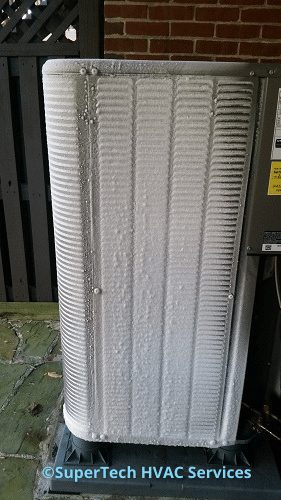
Now that you understand how a heat pump works, it's easier to see why heat pumps can commonly freeze up in cold weather. When heating mode is in use, the refrigerant turns from vapor to liquid as it comes in contact with the outdoor coil. As a result, condensation forms on the outdoor coil. When the temperatures drop below 32 degrees, the condensation freezes, creating a layer of ice on your outdoor heat pump unit.
How To Tell If Your Heat Pump Is Frozen
The best way to tell if your heat pump is frozen is to check the outdoor unit. If you see ice or frost on the exterior of the condenser, the heat pump is frozen.
What Is The Defrost Cycle?
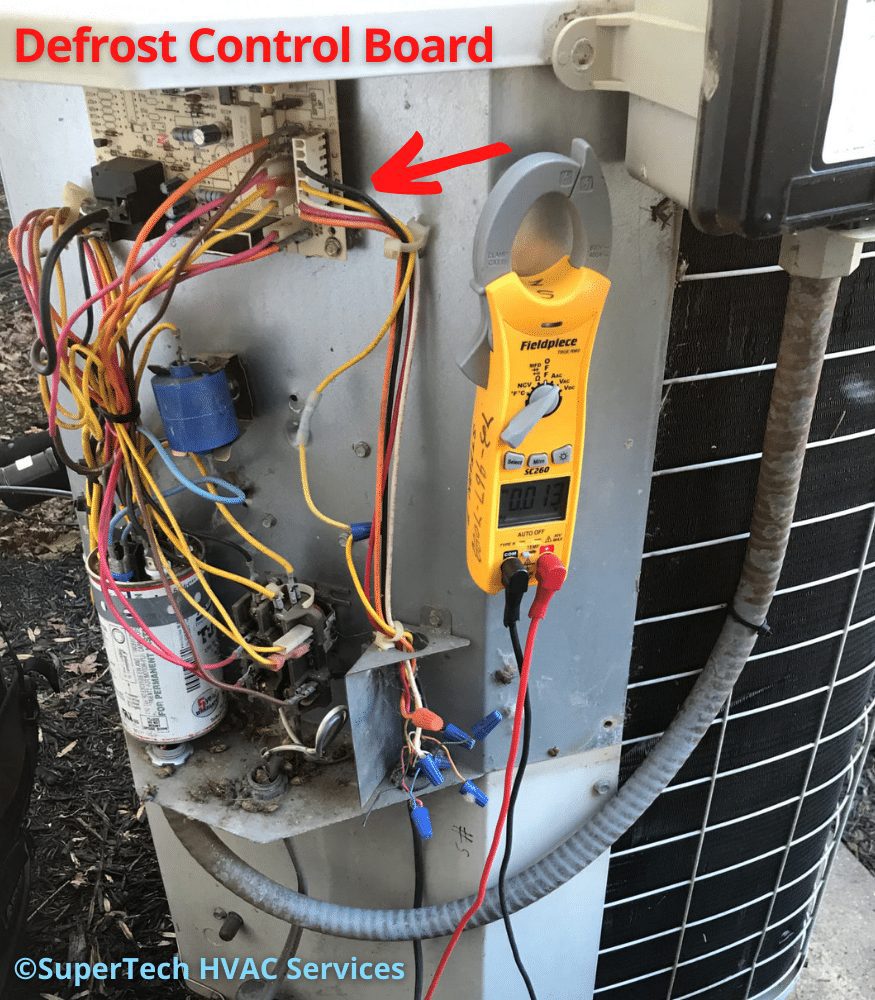
It is expected for a heat pump to become icy during the winter, so all heat pump systems have a defrosting function. When the defrost control board detects conditions for ice formation, it activates the reversing valve. The reserving valve reverses the refrigerant flow during the defrost mode and sends hot refrigerant into the outdoor coil, as it would in cooling mode. The hot refrigerant raises the internal temperature of the outdoor unit, defrosting the heat pump condenser unit. When the defrost mode is operating, your heat pump relies on your auxiliary heat to keep your home up to the thermostat's set temperature. Read more about what your auxiliary heat is here.
The defrost cycle lasts approximately 10 to 15 minutes. Afterward, the heat pump system will function normally, with the defrost mode triggered as needed.
How To Fix Frozen Heat Pump:
Step 1. Assess Area Around Frozen Heat Pump
Debris, such as snow, dirt, plants, and leaves can suffocate the outdoor heat pump unit. This prevents the outdoor evaporator coil from vital heat transfer and can make your heat pump freeze up in the winter. It is valuable to assess whether the surrounding area is encroaching on the heat pump's ability to bring in outside air. Clear the space around the outdoor heat pump unit.
Another element to be aware of it is whether the gutters drip on top your outdoor heat pump unit. If your gutters are not properly draining water or are secure, they could be pouring excess water all over your heat pump. Excess water dripping from your gutters can make your heat pump freeze up when temperatures drop.
Step 2. Shut Off Heat Pump
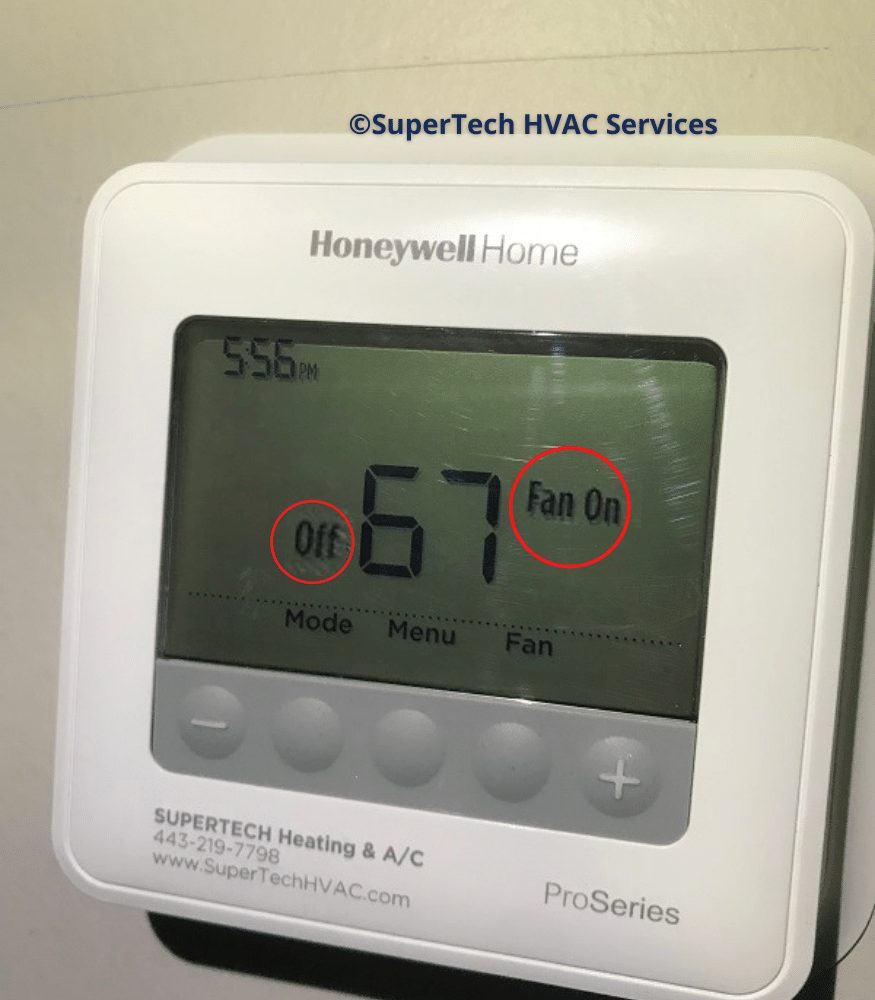
The best way to attempt to defrost a frozen heat pump is to turn off the heat pump and turn on the fan. You can do this on the thermostat.