
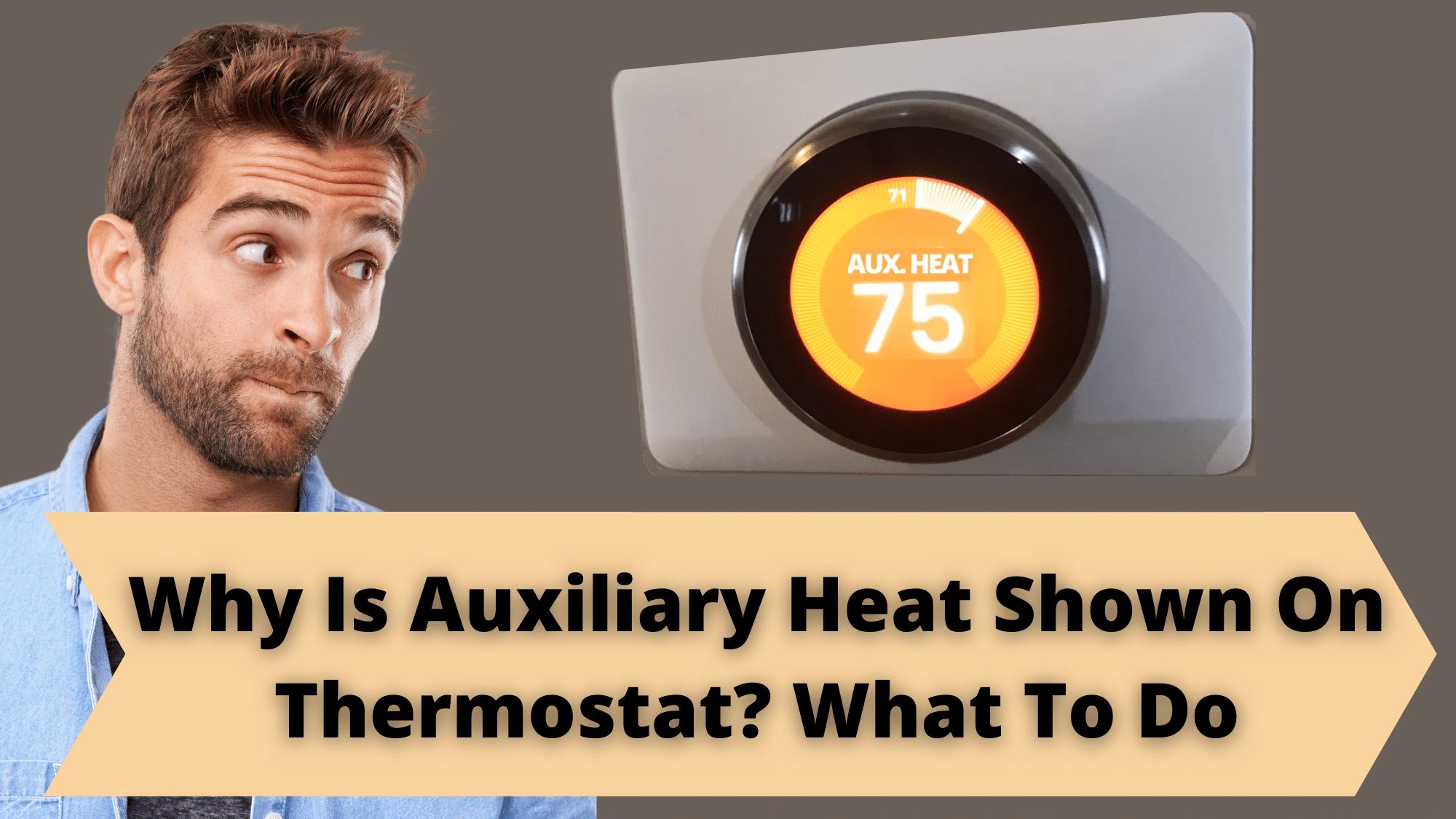
Michael looked on with mounting dread as his thermostat's auxiliary heating icon lit up. He stressed the utility bill would skyrocket if he didn't turn it off, but why had it turned on? What should he do?
Winter is in full swing, and you're relying on your heat pump to keep you comfortable all season long. But lately, you've been noticing an AUX heat icon displayed on your thermostat screen. Unfortunately, you're not sure what it means or why it's on. As a result, you become worried about high utility bills, and the possibility that your heat pump is malfunctioning.
Fear not - SuperTech is here to help! This post will explain what auxiliary heat is, why it comes on, and how to keep it from staying on. And if you have a frozen heat pump, learn what to do here. Let's dive in!
Fix Your Heating With An HVAC Pro
How Heat Pump Works
Let's start with the basics!
It is essential to understand that heat pumps transfer heat from one area to another for heating and cooling. It draws heat energy from the outside air throughout colder months and moves it inside to heat your home. And to cool you off in the summer, the heat pump takes heat energy from inside your home and releases it outside.
The heat pump consists of an outdoor condensing unit and an indoor air handler unit as a split system. The outdoor heat pump condensing unit circulates refrigeration for heat transfer like a central air conditioning unit. Thanks to the reversing valve, a heat pump can change and reverse the refrigerant flow. This means it has two different functions: cooling your home in the summertime and heating it during the winter months!
For heating mode, the refrigerant in the outdoor condenser absorbs the heat energy from the outdoor air. Then it is pressurized and heated in the compressor to become a vapor or a gas. Then, it is sent to the inside air handler unit. The vaporized refrigerant is transported to the indoor unit coil. The cold air from your home is blown over the coil and absorbs the heat. As heat leaves the refrigerant, the refrigerant turns back into a liquid and is circulated back to the outdoor unit.
Amazing, right!? So, where does auxiliary heat come in?
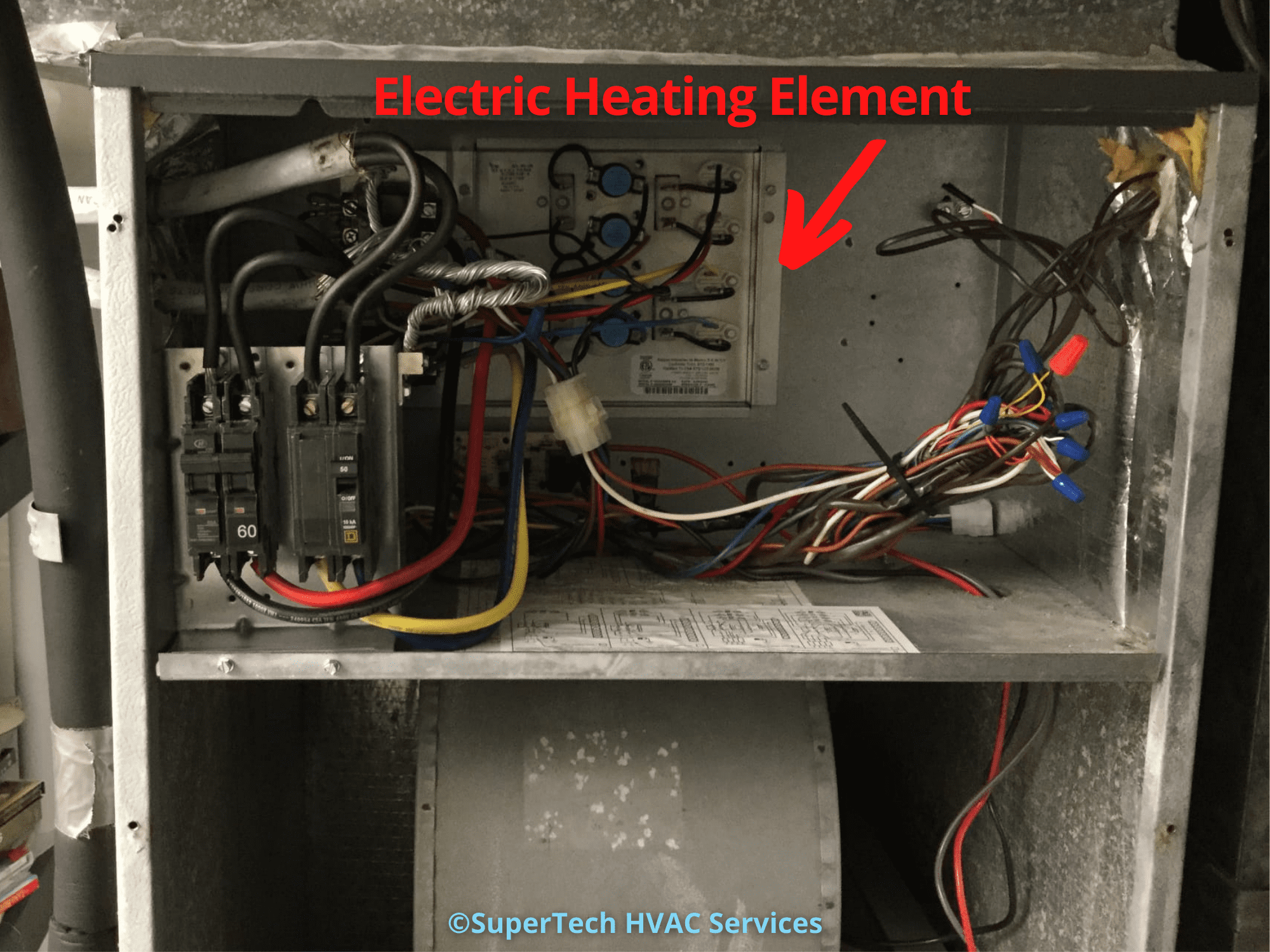
Electric heating element inside air handler
Inside the air handler is an electric heating element. This electric heating element, also referred to as electric resistance heating, is a supplemental heating source. Depending on the model of your heat pump, auxiliary heat and emergency heat are both functions of the electric heating element. Relying on the electric heating element to heat your home is expensive, which is why it can cause a bit of worry to creep in when the homeowner sees auxiliary heat on the thermostat.
You need your heat pump to keep working for your house to remain warm. If it freezes, this can be a serious problem.