
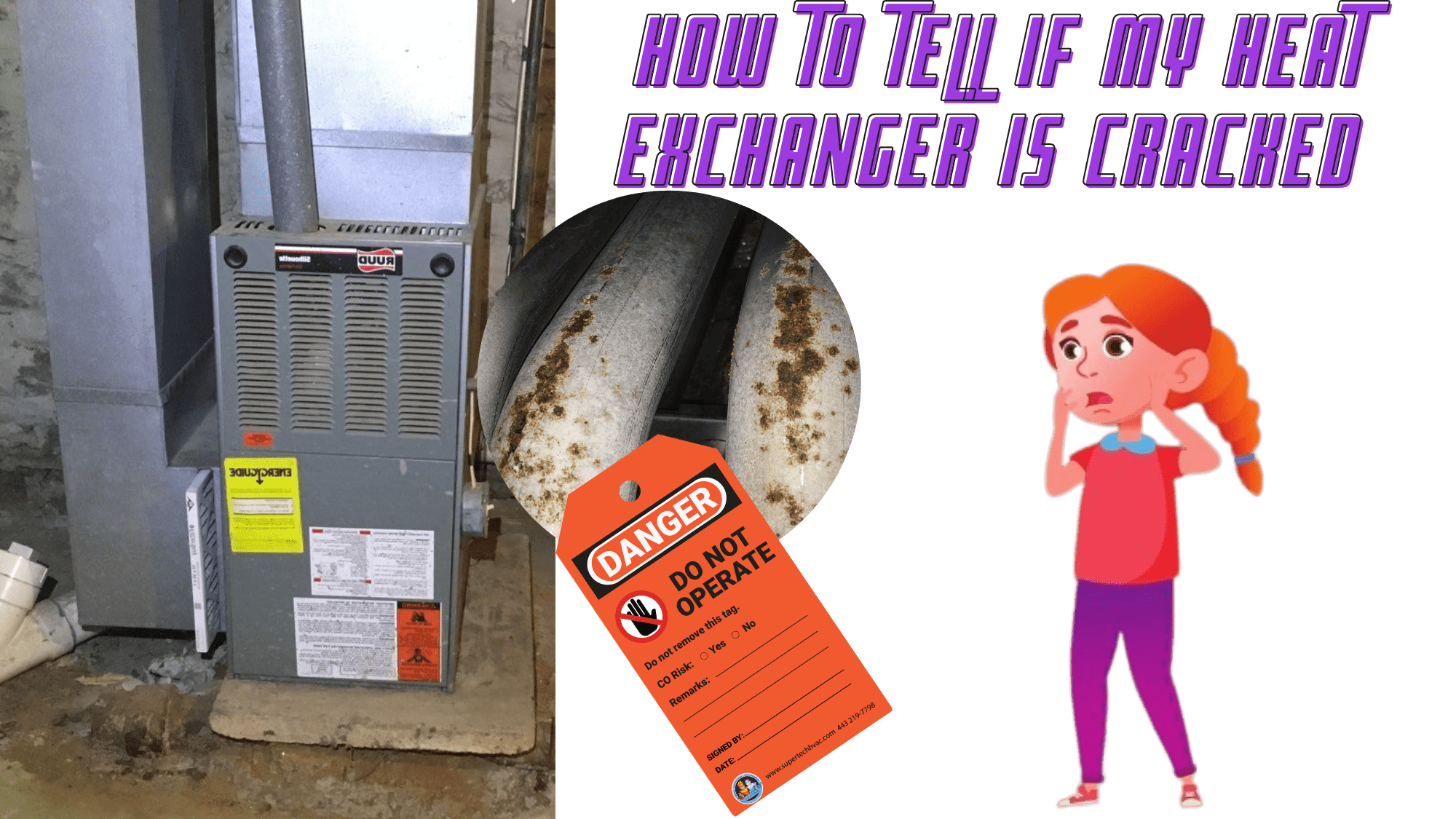
A cracked heat exchanger is a big problem for homeowners! It is not something you want to deal with on your own, and if it goes unresolved, the consequences can be disastrous. Here are some critical things to know about cracks in heat exchangers and how best to address them when they arise. So let's get into it!
Stay Safe With A superTech Furnace Repair
What Is A Heat Exchanger?
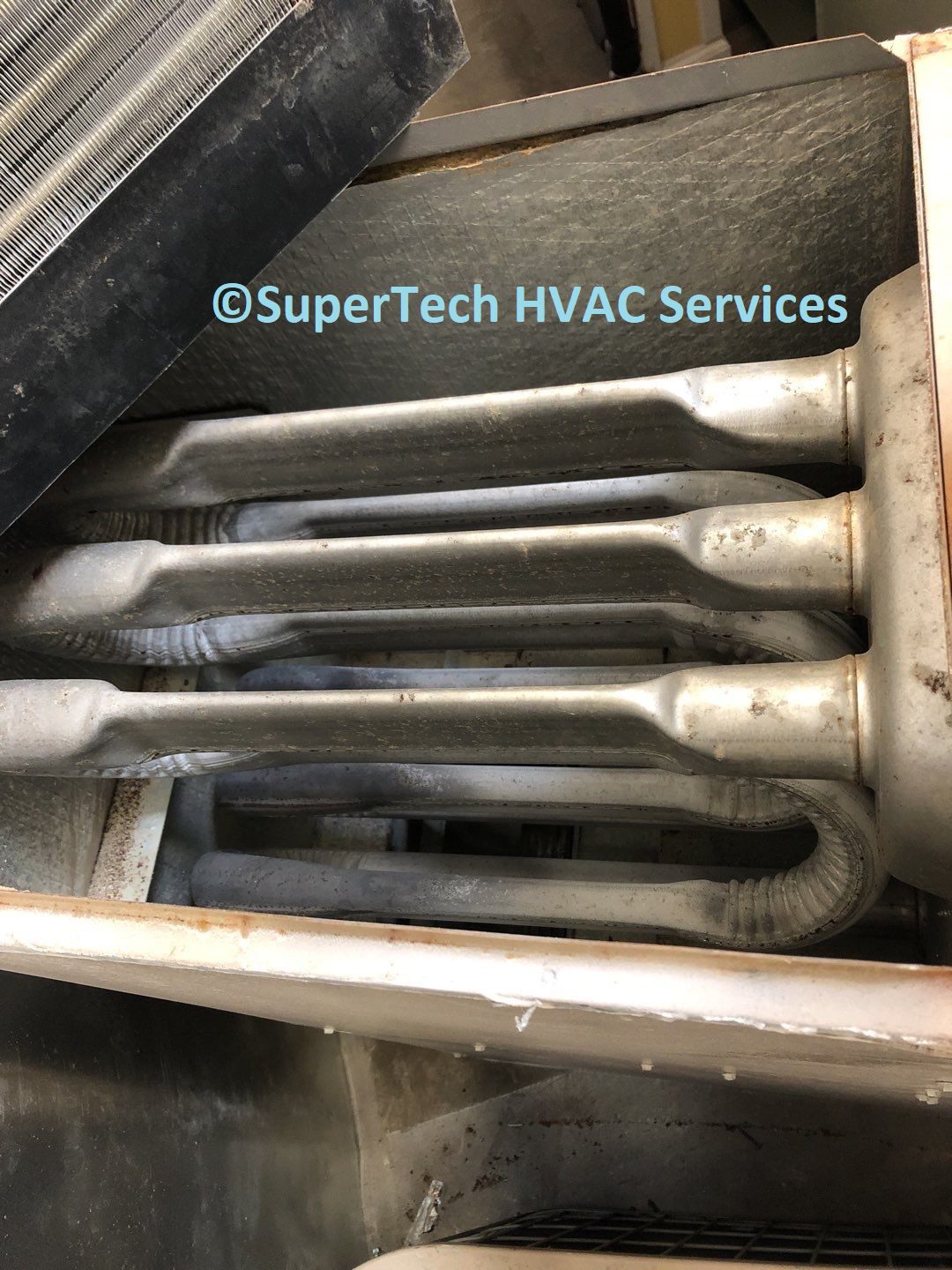
Heat Exchanger
For starters, what is a heat exchanger? Every gas furnace has at least one heat exchanger. The heat exchanger is a set of metal coils in the furnace that are warmed directly by combustion gas and fire. It is used to transfer the heat from the exhaust fumes / flue gas into your house without passing on any harmful gases!
Primary Heat Exchanger
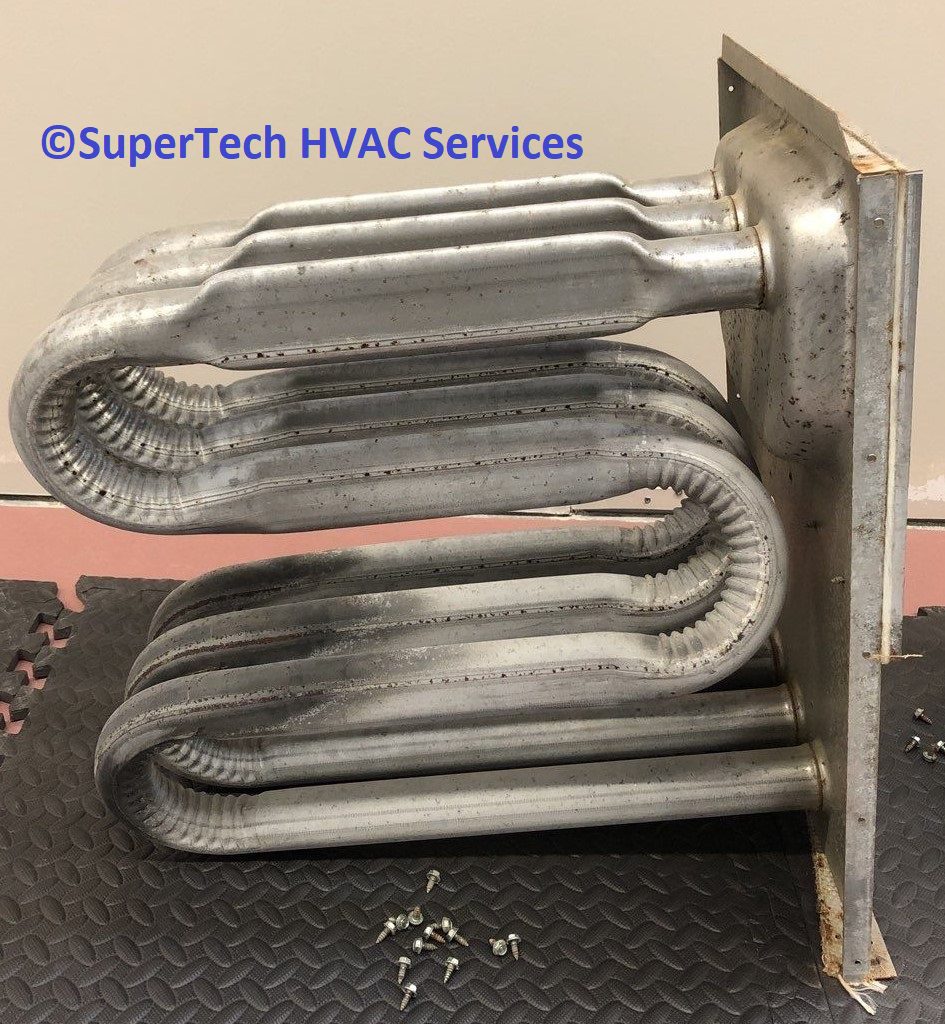
If your furnace is 70%-80% efficient, then you have only one heat exchanger. High-efficiency furnaces (90+%) contain a primary and secondary heat exchanger. The primary heat exchanger is the area that has the hottest flue gas and it is located near the burner.
Secondary Heat Exchanger
If you have a high- efficiency furnace (90%+) then you also have a secondary heat exchanger. The secondary heat exchanger is where the flue gas undergoes further heat exchange and water vapor forms. After exiting the primary heat exchanger, the burning gas proceeds to the secondary heat exchanger. As water is changed from a vapor to a liquid, it releases more heat into the secondary heat exchanger. This is what makes the furnace even more efficient.
Now, you may wonder what's the big deal with a small crack in your furnace heat exchanger. So let's get down to business.
Is A Cracked Heat Exchanger Dangerous?
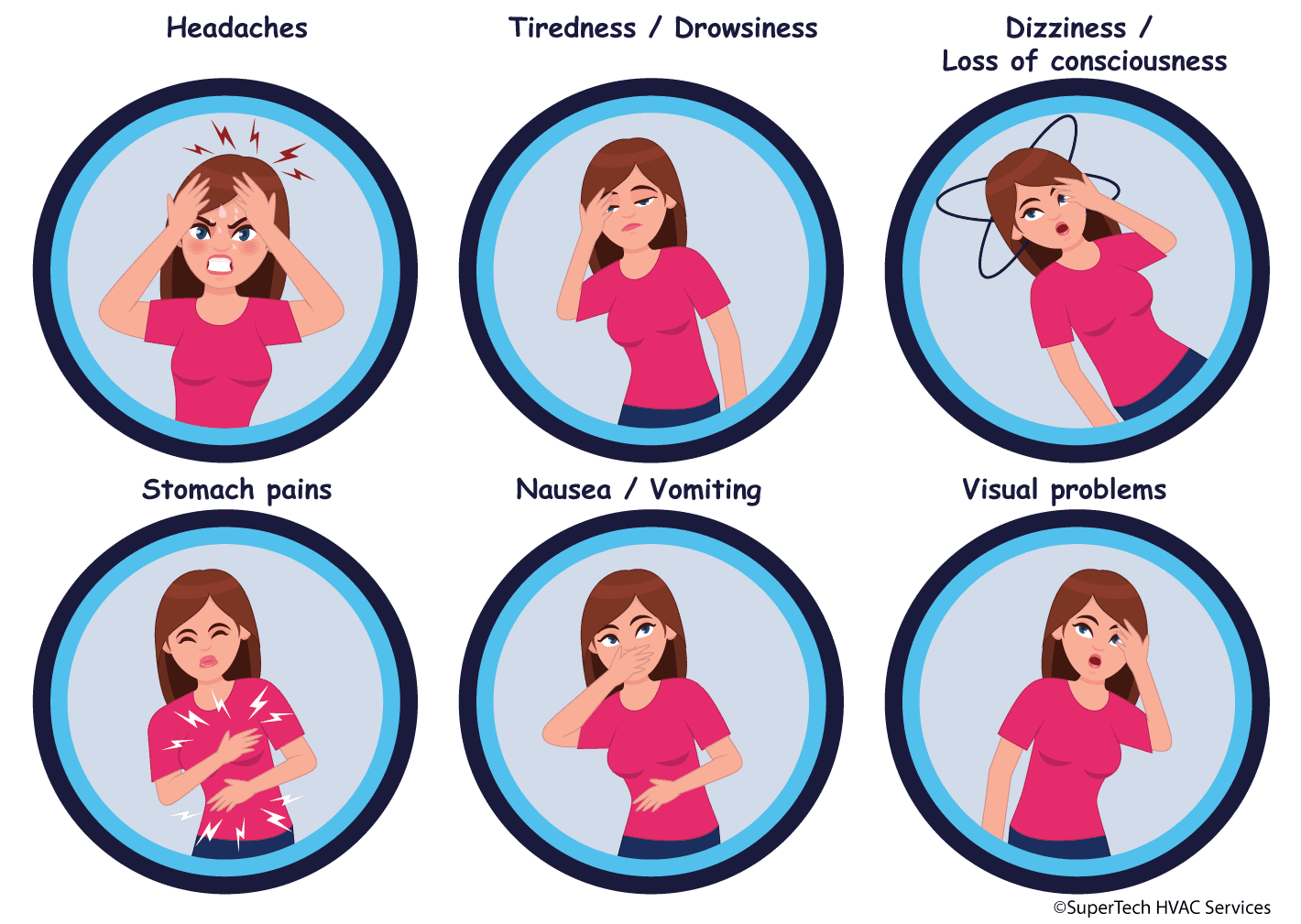
You're likely questioning whether a simple heat exchanger crack is dangerous or if the matter can be ignored? One thing's for sure a cracked heat exchanger is a silent death trap. If there is a heat exchanger crack, it can cause carbon monoxide gas (CO) to leak out of your gas furnace. Picture this, one minute you are sitting in your living room, and the next, blackouts all around! All because of this little piece that has been left unattended for too long. If it's not replaced soon, then be ready to say goodbye to life as we know it - without any warning at all! Bottom line: this natural gas is poisonous and can be fatal. Carbon monoxide poisoning manifests as unexplained headaches, dizziness, nausea, breathlessness, strange collapses, unconsciousness. tiredness, and problems with your eye sight.
How Do I Know If I Have A Cracked Heat Exchanger?
Surprisingly enough, one of the most frightening things is that you won't know if you have a cracked heat exchanger. When a crack occurs, usually there are no early warning signs until it has become nearly fatal. Your furnace might stop working if you're lucky, but most often, it will keep running even with a crack, allowing carbon monoxide to seep into your house. The only signs that you have a damaged heat exchanger is either no heat during the winter, reoccurring flu-like symptoms, or a beeping carbon monoxide detector. But not everyone is lucky enough to be given a warning sign.
Carbon Monoxide Detector Goes OFF
You may hear the carbon monoxide (CO) detector go off. You should be aware that if your CO detector goes off, your unit is not only leaking; it is probably releasing quite a bit of CO. Normally, CO detectors sound an alarm at high levels. Seriously, do not ignore an alarm from your CO detector! The majority of CO detectors have a high limit before they go off, and many do not even go off at all. CO detectors have an expiration date, so if yours is over five years old you should replace it.
Household Members Experiencing Flu-Like Symptoms
In the worst-case scenario, your cracked heat exchanger could be leaking carbon monoxide, and your detectors fail to detect it. Pay attention if anyone in your home develops headaches or flu-like symptoms without a clear reason. Carbon Monoxide exposure causes headaches, drowsiness, dizziness, nausea, and breathlessness, as well as collapse and unconsciousness and problems with vision. Elderly individuals, small children, and pets are especially vulnerable to carbon monoxide poisoning. We advise households with pets, small children, or elderly adults to use two carbon monoxide detectors.
Your Furnace Is Not Producing Any Heat
Look at it this way, if your furnace stops working because of a crack in your heat exchanger, consider yourself fortunate! The inconvenience of a broken furnace is nothing compared to the danger of a CO leak. An air leak in your furnace's heat exchanger could prevent the fire from burning in the firebox and blow it into the burner chamber. Depending on your furnace, it may shut off once a flame rolls out of the burner chamber, thanks to a safety detector called the Flame Roll out Safety Detector. It is important to note that this does not happen in every case of cracked heat exchangers. This is only the second best-case scenario; (the first-best option is to get annual furnace maintenance